Archive for the 'Natural Disasters' Category

Seismic Exploration
Seismic exploration is a geophysics method that uses seismology principles to determine the earth's properties, and more specifically, the subsurface of the earth. This methodology uses seismic waves reflected from the earth's subsurface to determine specifics like carbon emissions and has become a widely used technique in the study of hydrocarbons.  Continue Reading »
Devastating Hurricanes
  • Devastating hurricanes can cause billions of dollars worth of damage
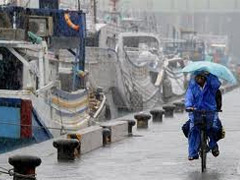
  • The Hurricane Katrina devastation is well known, and almost two thousand people died and hundreds of billions in damages were……
 Continue Reading »
Devastating Tornados
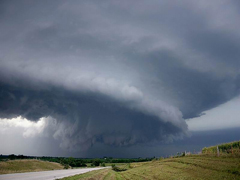
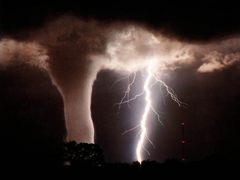
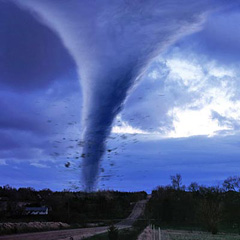
Devastating tornadoes have become more frequent in the past few decades, and these storms are full of incredible amounts of power that can be extremely destructive. Is it possible to harness this power and use it as an alternative energy source? There has been some research done into the potential that tornadoes have, and tornadoes have been created in the lab under specific conditions so that scientists can study how these storms act and how they can be used. Any potential energy source from tornadoes would probably be utilized with tornadoes created simply for their energy. It would be almost impossible to use tornadoes made by nature, because of their unpredictability and the extreme destructiveness of their power. It would be possible, however, to create tornadoes which are controlled in secure areas, so that their power can be used for energy instead of destruction.  Continue Reading »
Hurricane Katrina Destruction
Hurricane Katrina should always be remembered, and for many different reasons. This hurricane was one of the worst ever to hit American shores, and the results were devastating and deadly. Many people died and many more were left homeless without anything but the clothes on their backs. It took months to clean and rebuild the areas hit hardest by the storm. In some areas the damage has still not been completely repaired, and may not be for some time. The federal government was not prepared to deal with such a crisis and storm of this magnitude. This was most apparent right after Hurricane Katrina hit. People went days without food or water, emergency shelters were overcrowded and under supplied, and chaos reigned. This hurricane taught every American an important lesson: never underestimate the fury of nature. Continue Reading »
Tsunami Wave

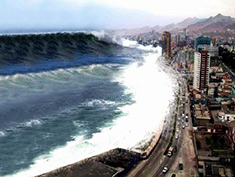
What is a Tsunami, and how is it formed? A Tsunami is a wave of water that has a very long wavelength, and it is caused by the disruption of a body of standing water, or when the sea floor is suddenly displaced. There are several things that can cause a Tsunami to occur, including earthquakes, volcanic eruptions, landslides, underwater explosions, meteorite impacts, and other events that can cause the water to be displaced. Tsunami can be called by many names, including tidal waves, seismic sea waves, and other terms. These natural formations can be deadly, especially to coastal communities. One coastal community may be relatively untouched, while another just miles away can be completely destroyed. When a Tsunami wave recedes, it can take debris and even humans back out to sea with it.

Earthquakes are one cause of a Tsunami. An earthquake can disturb the floor of the sea, and any time an earthquake occurs under the ocean or along the coasts a Tsunami can be generated. The stronger the earthquake, the bigger the Tsunami, but not all earthquakes will cause one. The displacement of the water and the seafloor is also critical, because only vertical displacement will usually result in a Tsunami. Most Tsunami that are generated by earthquakes have either reverse or normal displacement, and these occur most often by earthquakes that happen along the plate boundaries and along the trenches in these areas. The Pacific Ocean is ringed by these plate boundaries, and because of this the Pacific Ocean margins have earthquakes which commonly result in a Tsunami. Continue Reading »

Hurricane Power

Powerful hurricanes seen in the last ten years have been very destructive, but these hurricanes also have the potential to be used as an energy source, if their energy can be harnessed. Hurricanes release energy, and in one day the amount of energy released by a single hurricane is enough to equal the amount of electricity consumed in the entire world for a two hundred day period. Hurricanes last for more than one day, and they continue to build as long as the ocean water is warm enough to supply the energy needed. Once a hurricane reaches cooler water or land, the energy source is gone and the hurricane will slowly diminish and release less energy.

Powerful hurricanes hold an enormous potential as renewable energy sources, and one aspect of these storms is the renewable wind energy that can be harnessed. Wind turbines have been in use for years, and wind turbines at sea have shown significant potential concerning wind energy benefits. The ocean is an open space, which means that there are no obstacles to slow down or block the wind over the water until it hits the land. This allows the wind to gain more energy, and wind farms that are located offshore can produce large amounts of energy in good weather. The amounts of energy that could be harvested during powerful hurricanes and tropical storms could be enough to supply the world with electricity all year long. The possibility of harnessing the power of the wind from powerful hurricanes can be an answer to the energy crisis, global warming, and the dependence on fossil fuels and foreign countries. Continue Reading »

Hurricane Ike

Unfortunately, some scientists feel that Hurricane Ike and the devastation it caused was unusual. There is no question that hurricanes will get worse as greenhouse gases continue to trap heat and raise surface temperatures. In order to understand this, you need to look at three side effects of global warming and how they directly contribute to hurricane formation.

Sources of Heat and Ocean Currents

Today, most people think of the sun's rays simply as the Earth's primary heatsource. Few realize that the shifting of plates which cause earthquakes and volcanoes also supply heat to the ocean floors. Unlike sunrays, these processes may play a key role in the motion of ocean currents, which in turn, aid in the development of hurricanes and tropical storms. When combined with the steadily rising temperatures of the water, increased current rotation inevitably creates more hurricanes with larger sizes and stronger organization.  Continue Reading »