


Biodiesel Tree Fungus – New Bio Fuel Source
Tuesday,
Nov 25
Nov 25
With this fungus just discovered to be present in the rainforest near Patagonia, how many other beneficial alternative fuel sources may be present in these areas? This fungus shows the importance of protecting the rainforests because there are still a great number of unknown plants, animals, fungi, bacteria, and other organisms that may have an enormous impact on alternative fuels that are very environmentally friendly. Protecting the rainforests from destruction should be a priority because they could hold vast secrets that have yet to be discovered.
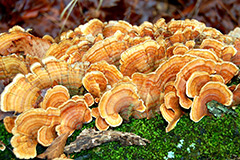
The tree fungus gliocladium roseum can be a key for researchers because this fungus will allow researchers to study it and engineer alternative microbes that will be much more efficient. The fungus contains several compounds that are found in diesel fuel. These include hexadecane, octane, 2-methyl, heptane, and 1-octene. This is the first time that these hydrocarbons have been found in a fungus like this, and it opens up a whole new world of possibilities concerning alternative fuels of the future. The fungus was found on trees that are present in the rainforest of Patagonia, and it has been heralded as a massive scientific discovery concerning alternative and eco-friendly fuels. The scientist who discovered the fungus has a name for any fuel derived from it: myco- diesel, because the fuel comes from a fungus and mycology is the word for the study of fungi.
Gliocladium roseum shows incredible promise, but much research still needs to be conducted before this source of hydrocarbons would be able to put a dent in our dependence and use of fossil fuels. This fungus does, however, provide a possibility for meeting our fuel needs at some point in the future. The fungus only produces the hydrocarbons when exposed to certain conditions, which are difficult to create outside the lab, but it is an arrow that will allow researchers to head in the right direction when it comes to new and unusual sources of biodiesel products.
Related Posts
- Ethanol or Biodiesel?
- Pros and Cons of Ethanol Production
- Corn Ethanol and Soybeans Biodiesel: Biomass fuels of today
- Biodiesel Fuel - Clean Burning Fuel
- Hydrogen Fuel Cells Technology that Can Change the Future
18 Responses to “Biodiesel Tree Fungus – New Bio Fuel Source”
Leave a Reply
You must be logged in to post a comment.

Top Popular Posts
Recent Posts
Recent Comments
Head Writer and Editor

hey, nice blog…really like it and added to bookmarks. keep up with good work
September 11th, 2010 at 9:58 am…
thank you for sharing the information…..
August 31st, 2010 at 2:16 pmI absolutely agree while using first commentator, so it truly is not a fake. But I heard a lot of various opinion on this topic.
August 26th, 2010 at 4:07 amJust believed i would comment and say neat design, did you code it yourself? Looks good. Jeremiah
August 25th, 2010 at 12:29 pmthis page is exactly what i’m looking for! I found this article bookmarked by a friend of mine. I will also share it. thanks!
August 5th, 2010 at 5:17 pmwoh…so great …..hey all microbiologist be prepaired with ther wepons to produce fuel
January 22nd, 2010 at 6:00 amI think another concern to consider is not how MUCH fungus can be created in a lab, but how QUICKLY this fungus can be created in a lab. Society not only consumes a lot of fuel, but we consume it very quickly as well.
April 7th, 2009 at 4:26 pmI mean biodiesel, I’m sorry, wrong spelling.
March 1st, 2009 at 8:47 amWeeee!fungus is now a source of biodies.
March 1st, 2009 at 8:46 amIt is really a big help to us, especially those who are
dependent to foreign oil. This could help a lot!!
I have a question, what other fungus which can be
a source of boidiesel?
Why hasn’t this been thought of before? I always thought fungus was something that we eat (yes, mushrooms are fungus), now there is proof that it can be used as a fuel? That’s awesome!
February 10th, 2009 at 12:27 pmOh, wouldn’t that be cool if tree fungus could be made into a renewable resource? It really is amazing what the enviroment produces that we can use to run all sorts of things!
February 10th, 2009 at 12:26 pmWow tree fungus as an energy source? It amazes me the amount of things that scientist can come up with that can be used as an energy source.
February 7th, 2009 at 8:48 amLes the real question is will they use it to produce their own energy?
February 6th, 2009 at 9:06 pmIt’s good that this fungus was found in South America. At least now these poor people there have a chance to produce their own energy…
February 6th, 2009 at 3:45 pmI absolutely do agree with Larry: fungus can be a source of fuel – wow that’s great! but let’s just try to concentrate on something more viable.
February 6th, 2009 at 3:41 pmI think the real idea here is not just that this fungus is able to be an fuel source but that the overall picture is the fact that if this fungus can be a fuel source how many other funguses out there can be too.
February 6th, 2009 at 8:50 amyeah, that fungus is cool but I doubt it will suit the needs
peace,
February 4th, 2009 at 8:28 pmlarry
Interesting concept, but is there really enough of this fungus to make it a truly conceivable alternative fuel source?
January 19th, 2009 at 12:47 am