


Business status for oil companies after the Gulf spill
Tuesday,
Jul 13
Jul 13
The oil spill in the Gulf of Mexico will most likely change the balance of power of international oil companies (IOC's) and national companies in the oil industry.
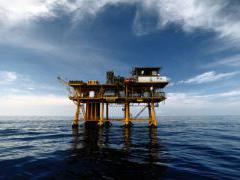
Of the 85 million barrels per day of oil used globally, about 30% comes from offshore oil wells and its share is gradually increasing. State companies hold most of the big onshore wells, so offshore is one of the few remaining areas of potential expansion for IOCs.
Mike Wittner, head of oil research at French bank Societe Generale, explained that an ever increasing amount of global oil production is offshore, in particular deep offshore.
The Caspian, the Gulf of Mexico, Brazil and West Africa are the new areas of exploration, and of those four, three of them are deep water zones.
However, since the oil spill and unsuccessful oil clean up, governments have been hinting on introducing an entire set of new rules regarding offshore operations. As part of this governments are proposing the obligatory drilling of secondary wells to act as a buffer in the case of an explosion such as that that occurred in the Gulf of Mexico. This would dramatically increase costs for the IOCs.
One of the IOCs' only advantages over national companies is their higher level of technological innovation, but governments will now have the power to demand that the operation is a joint venture and that they want technology to be shared before they agree to giving out new licenses.
As reserves are not easy to come by for IOCs, they may well have to swap their expertise and technology for licences or agree to less attractive terms for new contracts.
When governments are making important decisions about their waters and offshore drilling, they are certainly going to want to have full control over operations. For this reason they are either going to demand majority stakes, or they will ask for joint ventures or partnerships.
Despite all this, apart from the technological edge that IOCs have over national companies, they do have some further advantages, such as their retail networks and refineries, as well as their large customer bases. When IOC's try to win contracts, this is one of the main things they will market. In the near term, some technologies will remain in the hands of IOCs.
For more detailed information, visit: reuters.com
Related Posts
- Alternative Fuels: Propane - Safe or Not?
- Oil Refining Process for Dummies
- Facts about Offshore Oil Drilling in US – updated article
- Can the price of gas keep rising?
- Future of Oil Exploration
4 Responses to “Business status for oil companies after the Gulf spill”
Leave a Reply
You must be logged in to post a comment.

Top Popular Posts
Recent Posts
Recent Comments
Head Writer and Editor

I really liked your post.Thanks Again. Keep writing.
September 4th, 2010 at 9:15 amFirst the BP Gulf oil spill, now we see that the Mariner Energy rig has blown up in Louisiana. I sure hope that this doesn’t mean more environmental destruction. On the other hand, this nation needs this domestic energy. This such a complicated scenario to figure out. I’m not sure what the solution is.
September 3rd, 2010 at 6:50 pmThis oil leak is really a disaster. The BP bosses will not acknowledge responsibility though
July 27th, 2010 at 6:10 pmI ponder when they will come to their senses and discontinue with all the oil. Alternate technologies has already been there to replace it all!
July 22nd, 2010 at 1:42 am