


The initial research into underwater energy has produced new avenues for use as an alternative energy. Where is underwater energy being used? How easy (or difficult) is it to harness this energy? Will we see underwater energy as a major alternative soon?
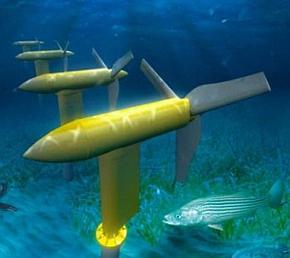
One solution to harnessing energy from underwater is through the use of underwater turbines. They look somewhat like wind turbines, but they are a lot stronger, because they have to withstand the pressure and power of very rough currents. Many areas exist that are perfect locations for such turbines, an example of which is the northeast U.S. coast, just off the state of Maine. The ocean currents are very strong, and they can easily turn the turbines that are underwater. This generates electricity and other energy forms.
Another renewable energy source available from the ocean is called ocean thermal energy. The ocean surface water is warmed up by the sun, which creates a massive difference in temperature between the deeper water and the surface water. It is precisely this temperature difference that provides thermal energy. This energy source is dependable and renewable because the ocean comprises over 70 percent of the earth’s surface. So, utilizing ocean thermal energy could be yet another step to a cleaner environment.
Another type of energy available form the ocean is called mechanical energy. This energy entails using waves and tides. Tides are found under the surface of the water and are the result of the gravitational pull of the moon. Turbines can be used to harness tidal energy, much like in the case of currents. The turbine must be carefully placed though, in order to get the most use out of them. They are most effective where the tidal ranges are the largest.
Ocean energy is a very attractive source of energy in many ways, simply because of the vastness of the planet’s oceans. The costs of implementing underwater energy projects are projected to decrease drastically, and the payback period on investments will also decrease proportionately. Our oceans hold one of the keys to a more sustainable world and clean environment, and it is very possible that one day we will be able to access and capture a lot of the energy the oceans have to offer. This would be a tremendous breakthrough in the world of alternative energy. Where we stand today, it takes a lot of capital to implement an underwater energy project, and it could take years before all of the materials and specialists are gathered in order to build the equipment necessary to build the machinery. It is important for this machinery to be strong enough to withstand rough weather and water conditions. So, because of the high costs, it is not yet common to produce underwater turbines. However, it is a very sound concept, and it is only a matter of time before it is properly implemented.
For more information, go to:
en.wikipedia.org,
energysavers.gov
Related Posts
- How Can We Conserve Water and Energy?
- Global Warming Skeptics: Is Global Warming Real?
- Will Bioenergy Save Mankind?
- What is Strategic Petroleum Reserve (SPR)?
- Are clean burning fuel engines a possible reality?
13 Responses to “Underwater energy sources – Updated Article With Extra Information”
You Can Use This Form to Leave Your Feedback or Ask Additional Question
You must be logged in to post a comment.

Top Popular Posts
Recent Posts
Recent Comments
Head Writer and Editor

The premise of the article is correct; that ocean energy in all its various forms hold unlimited promise for green energy generation. The big problem though is balancing environmental needs with environmental needs. Ironically, the opponents to many of the projected ocean energy schemes are environmentalists themselves! The fish will suffer blah blah…
December 9th, 2010 at 4:01 pmYes but tidal energy is also one of the most limited as there are very few places where it can be utilized. In fact, many western countries have nowhere left where a tidal barrage could be feasably built. Remember that such a scheme has many environmental concerns in itself, so permission to build takes years to get and is extremely difficult/costly.
December 9th, 2010 at 3:57 pmTidal power is in some ways the best of all of these because it is a very reliable source of energy as it is completely predictable. The other sources of energy are all subject to environmental conditions, and this is extremely important when it comes to moving away fully from fossil fuels to clean energy.
December 9th, 2010 at 3:54 pmwho is the author?
November 30th, 2009 at 8:37 pmi am looking 4 underwater volanic gas emmitions
May 13th, 2009 at 6:06 amcan u get me somethinig on that
are you kidding me? how in the heck would this harm our water supply? There is no way it could. All it is, is wind trubines under water. Its not taking water in or out. The current is simply making the blades spin to creat energy. And for the bird and fish person, the wind turbines dont move faster than a certain speed, if the blades get spining too fast then it will automacitally shut off. And i dont think they will make the blades razor sharp either. So i dont think you will have to worry about your precious birds and fish.
April 6th, 2009 at 3:55 pmI will definitely need to do some more research on this subject and find out if this would harm our oceans or seas — if it doesn’t, I’m all for it! If it does, then that needs to be taken into consideration.
February 10th, 2009 at 12:31 pmThere is so many things under the water that we simply are not aware of, it is great to see we are searching for ways to use the ocean and seas as a renewable energy!
February 10th, 2009 at 12:30 pmPersonally I am still on the fence about whether this is a good idea or not. I think I will need to do more research on this to really be able to set my opinions one way or another. Great post and very informative.
February 8th, 2009 at 9:31 amI have to say that if this is in anyway harmful to our oceans and seas then I think we need to look elsewhere for a different type of energy source that will not cause harm to anything. Isn’t that why we are looking into alternative resources anyways?
February 7th, 2009 at 8:49 amJules it would leave us up a creek without a paddle. If something happened to our water supply things would fall apart quite quickly so that is what makes me wonder if this is really the answer.
February 6th, 2009 at 9:07 pmI am always concerned with anything that has to do with our worlds water. This is one of our largest resources and if something were to happen to it where would it leave us?
February 6th, 2009 at 8:52 amOkay, so wind turbines are dangerous to birds which would make underwater wind turbines dangerous to fish. Where is the advantage?
February 2nd, 2009 at 6:03 pm